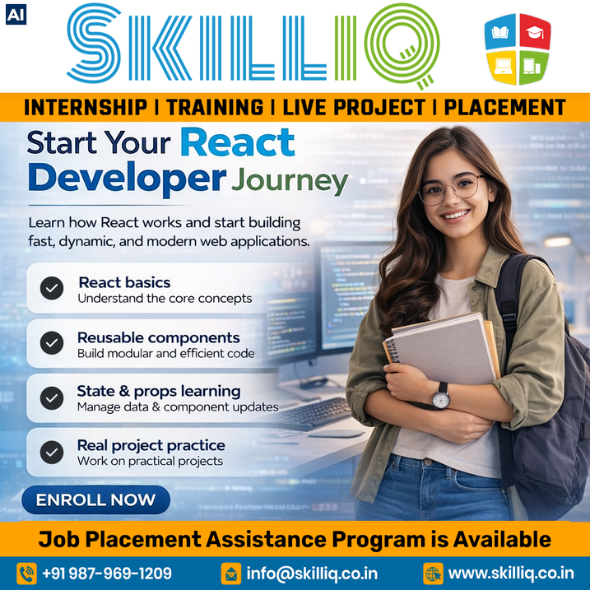
In today’s fast-paced digital world, web development has become one of the most in-demand career paths. Businesses are constantly looking for modern, dynamic, and user-friendly web applications to engage their audiences and stay competitive. Among the many technologies available, React has emerged as one of the most popular and powerful tools for building interactive user interfaces. For aspiring developers, learning React can open the door to exciting career opportunities in the tech industry.
Starting your journey as a React developer requires the right combination of knowledge, practical experience, and industry exposure. With structured learning and hands-on training, you can build the skills needed to create high-performance web applications and establish a strong foundation in frontend development.
Why Learn React?
React is a widely used JavaScript library developed for building fast and interactive user interfaces. It is known for its efficiency, flexibility, and ability to create reusable components, making it a preferred choice for developers and companies worldwide.
One of the main reasons React is so popular is its component-based architecture. Instead of building entire applications from scratch, developers can create small, reusable components that can be combined to form complex user interfaces. This approach not only saves time but also makes applications easier to manage and scale.
Additionally, React offers excellent performance through features like virtual DOM, which ensures faster updates and smoother user experiences. These advantages make React a valuable skill for anyone looking to enter the web development field.
Building a Strong Foundation with React Basics
Before diving into advanced concepts, it is essential to understand the basics of React. Learning core concepts such as components, JSX, and the structure of a React application helps build a solid foundation.
Understanding how React works internally allows developers to write better and more efficient code. Beginners start by learning how to create simple components and gradually move toward building complete applications. This step-by-step approach ensures clarity and confidence in the learning process.
Creating Reusable Components
One of the most powerful features of React is the ability to create reusable components. These components allow developers to break down complex interfaces into smaller, manageable parts that can be reused across different sections of an application.
Reusable components improve code efficiency and reduce duplication, making development faster and more organized. For example, elements like navigation bars, buttons, and forms can be created once and used multiple times within an application.
Learning how to design and implement reusable components is a key skill that helps developers build scalable and maintainable applications.
Managing Data with State and Props
Data management is a crucial part of any web application. In React, this is handled through state and props. Understanding how to use these features effectively is essential for building dynamic and interactive applications.
Props are used to pass data between components, while state allows components to manage and update their own data. By mastering state and props, developers can create applications that respond to user inputs and update in real time.
This knowledge is fundamental for building features such as forms, user interactions, and dynamic content updates.
Hands-On Learning with Real Projects
While theoretical knowledge is important, practical experience is what truly prepares you for a career in development. Working on real-world projects allows you to apply what you have learned and gain confidence in your skills.
Hands-on projects help you understand how to structure applications, manage data flow, and solve real challenges that developers face in the industry. These projects also serve as a portfolio, showcasing your abilities to potential employers.
By building real applications, you gain a deeper understanding of React and improve your problem-solving skills, which are essential for professional growth.
Industry Exposure and Internship Opportunities
Learning React is just the beginning. To become job-ready, it is important to gain exposure to real industry environments. Internship opportunities provide valuable experience by allowing you to work on live projects and collaborate with professionals.
During internships, you learn how development teams operate, how projects are managed, and how to meet client requirements. This experience helps bridge the gap between learning and working in the industry.
Internships also enhance your communication and teamwork skills, which are important for any professional role.
Preparing for a Career as a React Developer
A career in React development offers numerous opportunities across various industries. Companies are constantly looking for skilled developers who can build responsive and high-performance web applications.
By learning React, you can pursue roles such as frontend developer, web developer, or UI developer. These roles involve creating user interfaces, optimizing performance, and ensuring a seamless user experience.
With the right training and practice, you can develop the skills needed to succeed in these roles and build a rewarding career in technology.
The Importance of Continuous Learning
The technology landscape is constantly evolving, and developers need to keep learning to stay relevant. React itself continues to evolve with new features and updates.
By staying updated with the latest trends and continuously improving your skills, you can remain competitive in the job market. Learning additional tools and libraries that complement React can further enhance your capabilities.
Continuous learning ensures long-term growth and opens up new opportunities in the tech industry.
Conclusion
Starting your journey as a React developer is a smart step toward a successful career in web development. With its powerful features, high demand, and wide range of applications, React offers endless opportunities for growth and innovation.
By building a strong foundation, working on real projects, and gaining industry exposure, you can develop the skills needed to become a confident and capable developer. Practical experience, combined with the right guidance, prepares you to meet industry expectations and succeed in a competitive environment.
With dedication, consistent practice, and a focus on learning, you can turn your interest in React into a rewarding and future-ready career.
 :
https://in.pinterest.com/skilliq
:
https://in.pinterest.com/skilliq