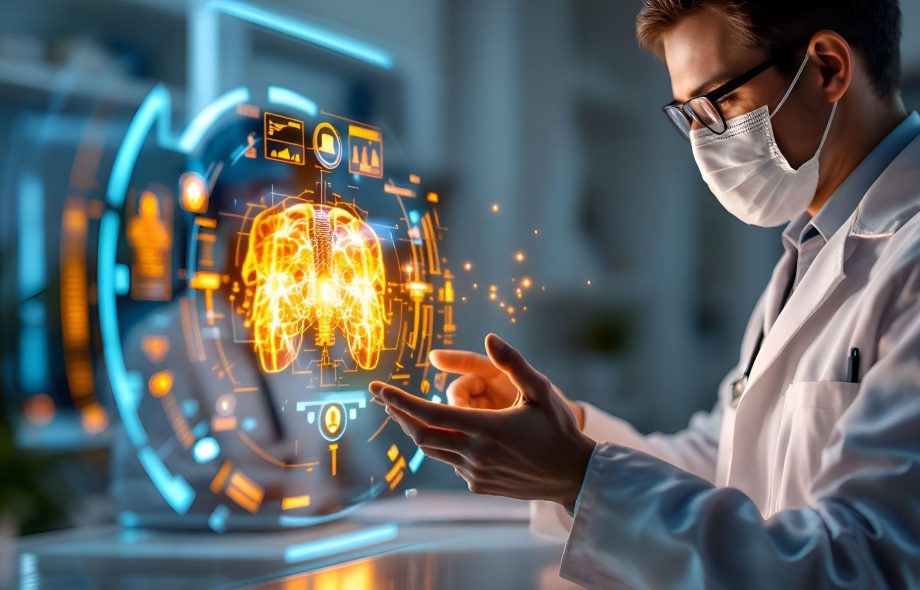
Healthcare is rapidly shifting from reactive treatment to proactive, predictive, and data-driven care. AI is no longer a futuristic concept in hospitals and clinics; it is actively shaping diagnostics, patient engagement, and operational efficiency. As systems grow more complex, professionals who understand both medicine and intelligent technologies will lead the next phase of healthcare transformation. This article explains why the future of care is increasing the need to become an AI healthcare expert, what that expertise really involves, and how clinicians and healthcare leaders can prepare responsibly for AI-enabled practice.
Introduction
For decades, healthcare largely operated in a reactive model. Patients sought treatment when symptoms appeared, and providers responded with diagnosis and intervention. That paradigm is changing.
Modern healthcare is moving toward proactive, data-informed, and continuous care. Wearables monitor vital signs in real time. Predictive models flag high-risk patients before conditions worsen. Health systems analyze population data to prevent complications rather than simply treat them.
Healthcare systems are experiencing greater difficulties in maintaining their operations. Worldwide healthcare systems face challenges that emerge from demographic shifts, increasing rates of chronic diseases, operational demands of healthcare systems, and new government regulations. Global health reports indicate that healthcare data volume grows at a rate that reaches double its previous size every three years. This growth presents significant operational challenges to clinical staff members who must handle and apply medical data.
Artificial intelligence technology serves as the primary technological component that enables the transformation process to proceed. The system uses advanced data analytics to handle large data volumes while delivering business insights and operational efficiency. The process of establishing oneself as an AI healthcare specialist involves more than just following current technology fashions.
The organization needs to prepare itself for the upcoming demands that will shape its future healthcare services. This article explains the reasons healthcare professionals need to acquire AI expertise while providing guidance on effective, responsible development methods.
How the Future of Care Is Changing Healthcare Expectations
The future of care is defined by personalization, prediction, and prevention. Instead of offering standardized treatments, healthcare systems are increasingly tailoring interventions based on genetic, behavioral, and environmental data.
Key shifts shaping expectations include
- Movement toward predictive analytics that anticipate disease risk
- Greater emphasis on preventive interventions
- Personalized treatment pathways driven by data insights
- Real-time monitoring through connected health devices
This transformation relies heavily on intelligent systems. Clinical decision-making now integrates analytics dashboards, imaging algorithms, and population health models. Healthcare organizations are under pressure to make faster, evidence-based decisions that improve outcomes while controlling costs.
Traditional healthcare skill sets alone are no longer sufficient. Clinical knowledge remains central, but it must be complemented by the ability to interpret data, evaluate algorithmic recommendations, and collaborate with technology teams. The future of care demands professionals who can bridge medicine and intelligent systems.
What It Really Means to Become an AI Healthcare Expert
Becoming an AI healthcare expert does not mean writing code or building algorithms from scratch. It means understanding how AI supports care delivery and how to use it responsibly within clinical environments.
In practice, this includes
- Understanding how AI assists in diagnostics and imaging analysis
- Recognizing how predictive models identify patient risk factors
- Using AI-supported tools to enhance clinical workflows
- Evaluating data-driven recommendations with professional judgment
AI expertise in healthcare also requires critical thinking. Algorithms generate insights, but clinicians must interpret those insights within ethical, contextual, and patient-specific frameworks.
When professionals choose to become an AI healthcare expert, they are committing to a deeper understanding of how technology influences medical decision-making. They learn to question outputs, assess reliability, and ensure patient safety remains the top priority.
Structured learning paths, such as AI healthcare certification or opportunities to learn AI in healthcare, can provide foundational knowledge without requiring deep technical specialization. The goal is competence and confidence, not programming mastery.
Where AI Is Already Transforming Healthcare Delivery
AI is not theoretical in healthcare. It is actively influencing how care is delivered across settings.
Key applications include:
- Clinical decision support and diagnostic assistance
AI systems analyze imaging scans and lab results to highlight anomalies and support faster diagnoses.
- Predictive analytics for patient risk and outcomes
Models identify patients at risk of readmission, complications, or disease progression.
- Intelligent patient communication and follow-up systems
Automated systems send reminders, monitor symptoms, and provide personalized guidance.
- Operational efficiency in scheduling and resource allocation
AI optimizes staffing levels, appointment scheduling, and bed management.
- Data-driven insights supporting evidence-based medicine
Healthcare leaders use analytics to refine treatment protocols and improve care quality.
These advancements are part of broader AI-driven healthcare solutions reshaping how organizations function. AI does not replace clinicians. It enhances their ability to deliver timely and informed care.
The Human and Ethical Responsibility That Comes With AI in Healthcare
Healthcare decisions affect lives. This makes trust, safety, and transparency non-negotiable when deploying AI.
Risks include
- Algorithmic bias that impacts certain patient groups unfairly
- Data misuse or inadequate privacy protections
- Over-reliance on automated recommendations
Human oversight remains essential. Clinicians must validate AI-generated insights, question inconsistencies, and ensure ethical standards are upheld.
Ethical understanding is not optional. It is a core requirement for anyone seeking expertise in AI-enabled care. Professionals must understand data governance, consent frameworks, and regulatory standards to ensure responsible implementation.
AI in healthcare must enhance compassion and fairness, not compromise them.
Skills Healthcare Professionals Must Develop Beyond Clinical Knowledge
To operate effectively in AI-enabled environments, healthcare professionals need additional competencies.
Important skills include
- Interpreting AI-generated insights responsibly
- Understanding data quality, limitations, and potential bias
- Collaborating with analytics and technology teams
- Communicating AI-driven recommendations clearly to patients
These skills allow clinicians to translate complex outputs into understandable and empathetic explanations. Patients need clarity and reassurance, especially when technology influences their care pathway.
Engaging in AI medical technologies training or pursuing an AI healthcare applications certification can strengthen these capabilities. The goal is to build fluency in AI concepts while maintaining patient-centered communication.
Common Misconceptions About AI in Healthcare Careers
Several misconceptions discourage healthcare professionals from engaging with AI.
One belief is that AI will replace clinicians. In reality, AI supports human expertise by processing data at scale, while clinicians provide judgment and empathy.
Another misconception is that AI expertise requires deep coding knowledge. Most healthcare professionals do not need to build algorithms. They need to understand how to evaluate and apply AI outputs responsibly.
Some view AI as a temporary technology trend. However, investment in intelligent systems across global healthcare markets suggests long-term integration.
Finally, ignoring regulatory and compliance requirements is a mistake. Healthcare AI must align with evolving legal frameworks and safety standards.
Preparing for the Future as an AI-Enabled Healthcare Professional
The future belongs to healthcare professionals who embrace interdisciplinary learning.
Preparation involves
- Building foundational knowledge of AI concepts within healthcare contexts
- Staying informed about regulatory changes and ethical guidelines
- Participating in continuous professional development
- Collaborating across clinical, technical, and operational teams
AI adoption should always align with patient-centered values. Technology must serve care quality, safety, and accessibility.
Those who proactively develop AI fluency will be better positioned to lead transformation efforts rather than react to them.
Conclusion
The future of care demands professionals who understand both medicine and intelligent systems. As AI becomes embedded in diagnostics, operations, and patient engagement, expertise in this space strengthens rather than weakens the human element of care.
To become an AI healthcare expert is to combine compassion with analytical insight, clinical judgment with technological awareness. It ensures that innovation enhances patient outcomes while preserving trust and safety.
The next era of healthcare will be defined not just by intelligence, but by responsible intelligence guided by skilled and empathetic professionals.
 :
https://www.pinterest.com/aicertsstore/
:
https://www.pinterest.com/aicertsstore/